
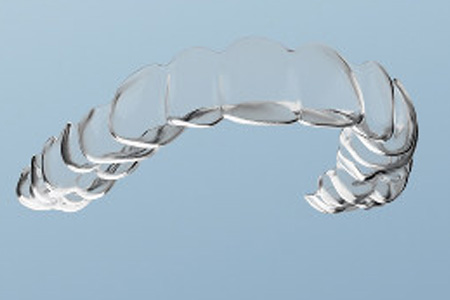
OrthoFX™, a leader in innovative clear aligner technology, announced preliminary results from a retrospective clinical study comparing treatment effectiveness and predictability of its FXClear aligner system with the leading clear aligner brand, Invisalign. The study, titled "Treatment Effectiveness of FXClear Aligner.
A Comparison Clinical Study," demonstrates that FXClear achieved significantly shorter treatment duration, fewer total visits, fewer aligners used, and more precise planned-to-final geometric fidelity than Invisalign, all while maintaining comparable finishing quality in mild-to-moderate malocclusion cases.
Key Efficiency Findings
The retrospective analysis represents the first head-to-head comparison of comprehensive treatment effectiveness parameters between two clear aligner systems in a clinical setting. The study was conducted across three private orthodontic practices and evaluated 111 cases (54 FXClear cases and 57 Invisalign cases) with comparable baseline malocclusion severity (American Board of Orthodontics Discrepancy Index (DI) scores of 13.20 vs. 14.70; p=.056). Both groups were treated by the same orthodontist using identical 7-day aligner change protocols, ensuring a controlled comparison. The preliminary study revealed:
Treatment Duration: FXClear cases completed treatment in an average of 17.3 months compared to 23.0 months for Invisalign—a reduction of nearly six months or 25% (p=.005).
Fewer Aligners: FXClear cases required an average total of 49 aligners versus 82 for Invisalign—a 40% reduction (p<.001).
Fewer Total Visits: FXClear cases averaged 12.6 total visits compared to 15.4 for Invisalign (p=.001), driven by significantly fewer virtual monitoring visits (2.3 vs. 5.5; p<.001). In-office visits remained comparable between groups (p=.533), indicating the effectiveness gains stemmed from optimized treatment protocols rather than reduced clinical oversight.
Geometric/Morphometric Comparison
Greater Treatment Precision: 3D superimposition analysis of planned vs. actual treatment outcomes showed FXClear (n=14) achieved significantly lower deviation (RMS) in both the upper arch (p=.0005) and lower arch (p=.0001), with 39–43% of surface points falling within ±0.5 mm tolerance compared to only 27–28% for Invisalign (n=14).
Comparable Finishing Quality: Modified ABO Objective Grading System scores confirmed that both systems achieved comparable clinical outcomes at the end of treatment. (n=10 for each group).
Clinical Significance: Precision Where It Matters Most
One of the study's most clinically significant findings involved treatment predictability. Digital superimposition of planned and final intraoral scans revealed that Invisalign cases exhibited deviations of up to 1.0 mm in the mandibular posterior occlusal surfaces - a finding the researchers noted suggests possible unwanted posterior open bite, a commonly reported complication with clear aligner treatment. In contrast, FXClear demonstrated deviations of less than 0.5 mm in comparable areas, indicating more consistent planned-to-final geometric fidelity in both the upper and lower arches.
"These findings suggest that FXClear may offer potential efficiency advantages in clear aligner therapy," the study authors concluded. "In mild-to-moderate complex cases, the FXClear aligner system resulted in fewer total visits, shorter treatment duration, and fewer aligners used compared to the Invisalign aligner system."
What This Means for Orthodontists and Patients
For orthodontic practitioners, the results highlight a meaningful clinical alternative in the clear aligner market. With 40% fewer aligners per case and nearly six fewer months of average treatment time, FXClear offers the potential for improved practice efficiency, including reduced treatment time and streamlined scheduling, without compromising treatment quality.
Company Commentary
"These preliminary results validate what our clinical partners have been telling us for some time, that FXClear delivers a meaningfully different experience for both the orthodontist and the patient," said Sheila Tan, Chief Commercial Officer at OrthoFX. "Shorter treatment times, fewer aligners, and greater precision aren't just numbers on a page. They ladder up to happier patients and greater practice efficiency. We're especially proud that this comparison was conducted under controlled conditions by the same clinician using identical protocols, because it reflects what's really driving the difference: the proprietary polymer innovation behind our aligner system."
Tan added, "This study is an important step in demonstrating that FXClear is not simply another aligner alternative; it's the next generation of aligner innovation and a clinically differentiated system built to raise the standard of care in orthodontics."
Study Methodology
The retrospective observational study evaluated patients aged 14 and older with mild-to-moderate malocclusion complexity (ABO Discrepancy Index scores between 10 and 30) treated at three private orthodontic practices by the same provider. All patients were treated with nonextraction approaches. Treatment effectiveness was assessed through digital superimposition of initial scans, final intraoral scans, and computerized treatment plan STL files using Geomagic Control X and Meshmixer software. The modified ABO OGS scores were graded for the final outcomes of each case. Statistical analysis employed independent-samples t-tests and Mann–Whitney U tests at a significance level of p<.05.
For more information please visit www.orthofx.com